Open Range Disclosure for Lamoille Land: Know Your Buyer Risks
October 1, 2026
October 1, 2026
By the time most buyers reach the closing table on a Lamoille acreage parcel, they have already read the purchase agreement twice, argued with a lender about a well letter, and signed enough initials to cramp a hand. Somewhere in that stack sits a single page titled Open Range Disclosure. It reads like boilerplate. Most people sign it the way they sign the page about lead paint in a house built in 2019: quickly, because it clearly does not apply to them.
It applies to more Lamoille land than many buyers expect, so it is worth understanding what the document says.
Nevada law requires this document under NRS 113.065, and it has to be delivered before you sign a sales agreement, not buried in the closing package afterward. The statute spells out exact language the seller must give you in writing. It says the property is adjacent to open range where livestock are permitted to graze or roam, and that unless you build a fence to keep animals out, you cannot collect damages when they wander onto your land. It also tells you that fence or no fence, it is against the law to kill, maim, or injure any livestock that gets onto your property.
Open range itself has a specific legal definition in Nevada. Under NRS 568.355, it means unenclosed land outside cities and towns where cattle, sheep, or other domestic animals are grazed or permitted to roam by custom, license, lease, or permit. Most of Elko County qualifies. The Bureau of Land Management alone manages roughly 63 percent of Nevada's land, and grazing is one of the primary uses on that ground. A parcel at the foot of the Ruby Mountains that backs up to BLM land, which describes a meaningful share of what sells in and around Lamoille, sits inside that definition by default.
The disclosure covers one more thing buyers rarely notice: a clause about old rights-of-way, sometimes called RS 2477 routes, that miners, ranchers, or hunters may still use to cross the parcel for access. These are historic routes accepted by public use going back decades, and the disclosure exists partly to warn you they can still be there even if nothing on a plat map shows it.
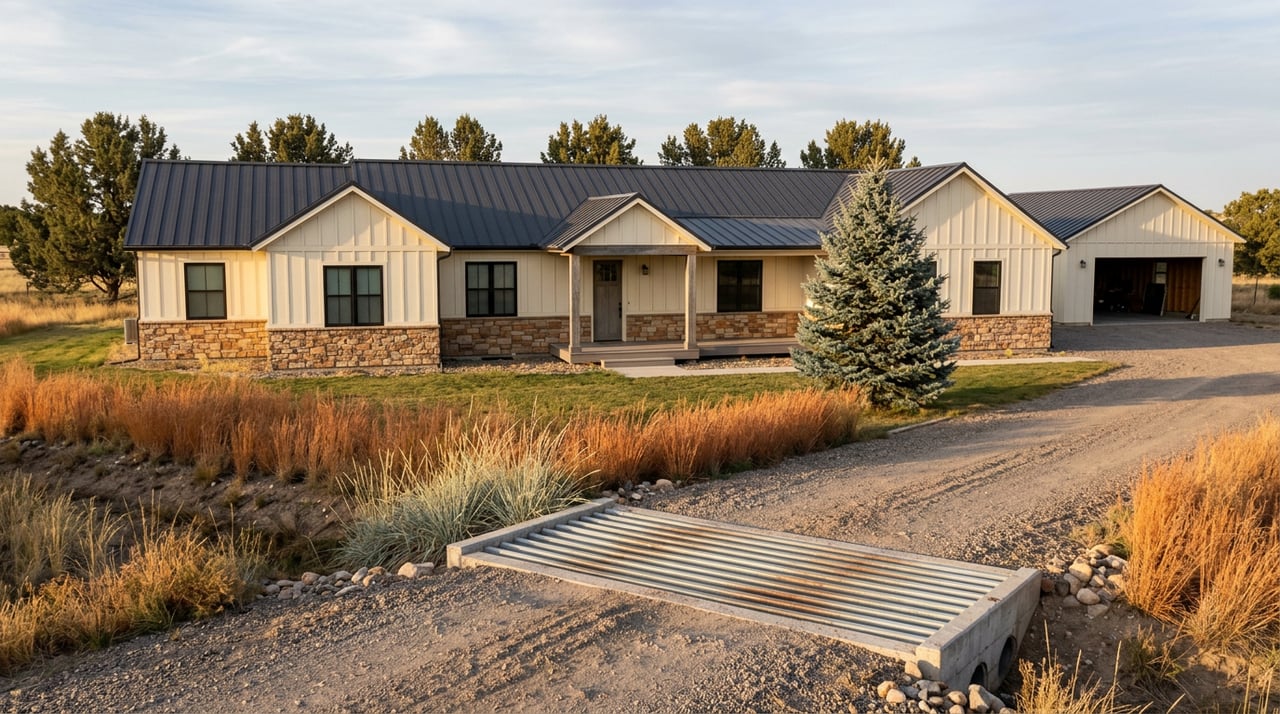
Here is the part that changes how the document should be read. Nevada's fencing law does not put the burden on the rancher to keep cattle off your land. It puts the burden on you to keep cattle out of it. Under NRS 569.450, a property owner cannot collect damages for livestock trespass if the land was not enclosed by what the statute calls a legal fence, and NRS 569.431 defines exactly what that fence has to look like to count. If your property isn't fenced to that standard, an animal wandering through your yard isn't trespass under Nevada law. It's just livestock doing what livestock on open range are legally allowed to do.
The Open Range Disclosure does not create this burden. It exists to prove the seller told you about it. Once the seller has served the disclosure, retained a signed copy, and recorded the original with the county recorder, compliance with the statute becomes the seller's affirmative defense if you later try to sue over livestock damage or a rights-of-way dispute. The paperwork documents that the seller told you about these risks; it does not itself keep livestock off your land. The fencing responsibility was already yours the moment you closed. The disclosure just makes sure nobody can say later that you weren't told.
The University of Nevada Cooperative Extension's fact sheet on open range law puts a fine point on why this matters more each year: the statute doesn't clearly spell out where a livestock owner's responsibility ends and a homeowner's begins, and as more residences get built in or next to open range, that gap keeps generating real disputes rather than fewer.
Some Lamoille buyers assume open range designations are a formality left over from an older, more rural Nevada, the kind of thing that fades as more houses go in. Elko County commissioners acted on grazing policy last year.
On October 15, 2025, the Elko County Board of Commissioners approved Resolution 2025-35, formally urging federal land agencies to expand grazing opportunities on public land as a tool for reducing wildfire fuel and improving range condition. The same meeting, the board sent a letter thanking the BLM for its recent Antelope and Triple B wild horse gather work. Commissioners had been pushed toward the resolution partly by written submissions from local rancher Cliff Gardner, whose comments on grazing and wildfire risk prompted the board to direct staff to draft language for a future vote. The vote made the county's position on public-land grazing clear.
For buyers considering land near Lamoille, that public position is relevant context, particularly if they're closing on a parcel that borders BLM ground.
A buyer who treats the Open Range Disclosure as a real document rather than a formality has a short list of things worth checking before closing, not after.
None of this changes whether you should buy the land. It changes whether you understand what you're actually signing when that one page goes by quickly at the closing table.
Does the disclosure only apply to vacant land, or to homes too? Both. The statute covers any home or any improved or unimproved lot that is adjacent to open range, so a finished house on a Lamoille lot bordering BLM ground is treated the same way as a bare parcel.
If I build a fence, am I fully protected from livestock damage? Only if the fence meets Nevada's legal definition under NRS 569.431. A decorative fence or a partial one doesn't reset the trespass rules in your favor. The fence has to meet the statutory standard for a court to treat livestock entry as trespass at all.
Can I still be affected by old rights-of-way even if my title report doesn't mention any? Yes. The disclosure specifically warns about historic routes accepted through public use before or after July 1, 1979, sometimes called RS 2477 rights-of-way, which can predate modern title work and may still allow access by ranchers, miners, or hunters even when nothing on a current survey shows them.
If you're weighing a parcel near Lamoille that backs up to open range, Justine Oros has walked enough of these closings to know which questions belong on your list before you sign, not after. Let's Connect and go through the specific parcel together before it gets to the closing table.
This article is general information, not legal, tax or financial advice. Consult a qualified professional about your situation.


Every detail is handled with care to ensure properties stand out, attract attention, and secure competitive offers. From strategic pricing to targeted marketing, each step is thoughtfully designed to maximize exposure, create demand, and deliver strong, consistent results.