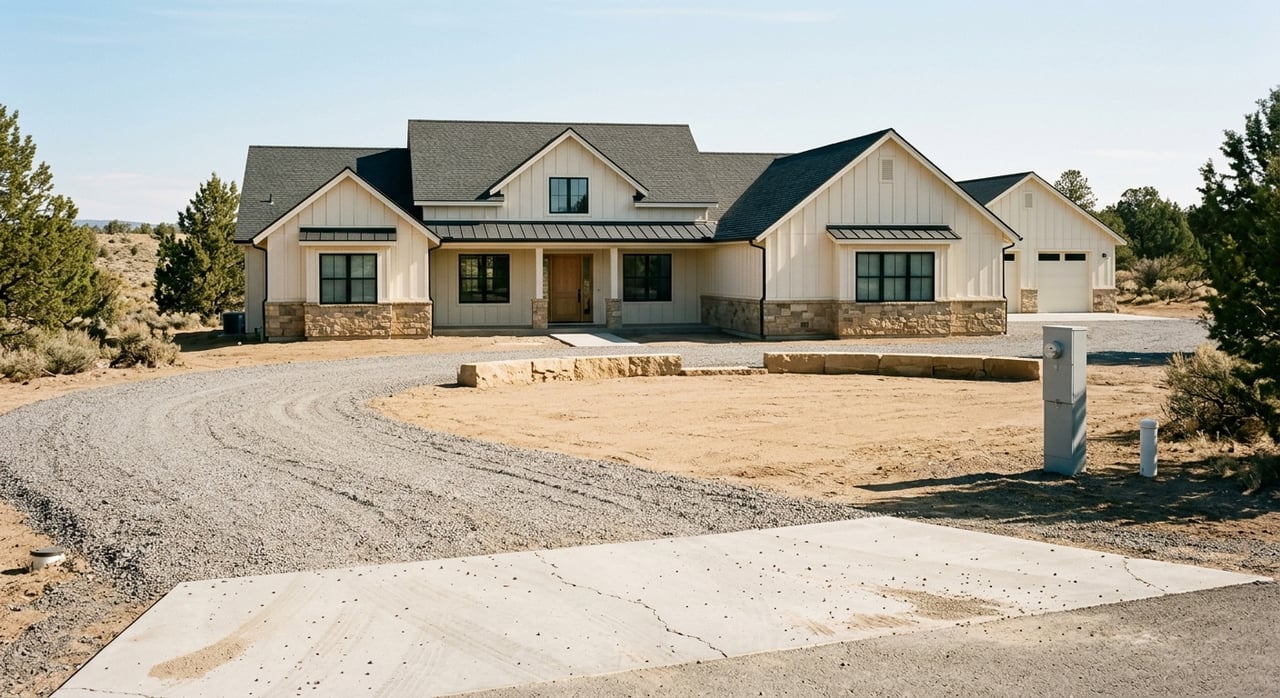
Guide To Buying Land And Acreage In Spring Creek
July 9, 2026
July 9, 2026
Looking at land in Spring Creek can feel exciting right up until the questions start piling up. Can you actually build on it, get utilities to it, and access it year-round without surprise costs? If you want to buy acreage with confidence, you need more than a pretty view. You need a clear plan for due diligence, and that is exactly what this guide will help you build. Let’s dive in.
Spring Creek is not just a standard neighborhood with a few open lots scattered around. The Spring Creek Association describes the community as a private property owners’ association with 5,420 lots across roughly 23.4 square miles, with about 150 miles of chip-sealed roads.
That scale matters when you are buying land or acreage. You are not only evaluating the parcel itself. You are also looking at road access, association context, utility options, and how the property fits into the broader development pattern.
Spring Creek is reached from Interstate 80 via Lamoille Highway, also known as SR 227, through Elko. Census Bureau QuickFacts show a 2020 population of 14,967 and an 87.2% owner-occupied housing rate, which points to a market shaped largely by people who plan to live on their property, not just hold it.
The Spring Creek-Lamoille master plan describes the area as semi-arid high desert with elevations of about 5,200 to 6,200 feet. It also notes hot, dry summers, sub-zero winter temperatures, about 8 inches of annual rainfall, and roughly 36 inches of annual snowfall.
For you as a buyer, that means land shopping here is not only about size and price. It is also about drainage, snow access, grading, and how realistic your building and landscaping plans are for the site.
If you remember one thing from this guide, make it this: access comes before almost everything else. A parcel may look great online, but if legal access is unclear or the road situation is weak, that can affect both your current plans and future resale.
Elko County code requires dedication of access and roadway easements for parcel maps. It also says the access road to resulting parcels must, at minimum, be graveled to county standards unless the land is used for agriculture.
There is another important detail many buyers miss. County maintenance of graveled or paved rights-of-way does not happen automatically. Formal county commission action is required before the county assumes maintenance and repair.
That means you should verify more than whether a road appears on a map. You should confirm the legal access, the type of easement involved, and who is responsible for upkeep.
Utilities can be the difference between a straightforward land purchase and a much more complicated one. In Spring Creek, the right question is not just whether utility service exists nearby. The real question is whether your parcel can connect on workable terms.
Great Basin Water Co. provides water and wastewater service in Spring Creek and is regulated by the Nevada Public Utilities Commission and the Nevada Division of Environmental Protection. The PUCN explains that utility tariffs govern service areas, rates, line-extension costs, new customer requirements, and related rules.
That is especially important for acreage buyers. A nearby line does not always mean easy or affordable service.
A local Spring Creek Association sewer and septic procedure sheet adds a practical warning. Sewer connections through Great Basin Water may be temporarily paused until plant capacity is available.
If that happens, you may need to pursue review for an individual sewage disposal system through Nevada’s health or public health process. Before you close, confirm whether the lot can connect now, whether a septic-style alternative may be needed, and whether future sewer connection could require abandonment of that system later.
County code states that parceling land in an existing platted subdivision requires electric utility service to the resulting parcels. If your long-term plan includes dividing land, utility questions become even more important early in the process.
Acreage buyers often think ahead. Maybe you want to build now and keep room for later. Maybe you are wondering whether a parcel could eventually be split. In Spring Creek, that question needs a careful review before you buy.
The Spring Creek-Lamoille master plan includes multiple land-use designations such as A-R, AR-CRD-1, AR-CRD-2, SL, R-1, and R-2. It emphasizes maintaining the rural estate character of the area with minimum parcel sizes.
The plan also discusses special lands at 10-acre or 20-acre parcel sizes and open-space areas that are generally 40-acre parcels. Historically, development in the area has often used 2.5- to 10-acre parcels with individual septic systems and domestic water wells.
Elko County code sets different review paths depending on parcel size and how many parcels are being created.
This matters because a property that seems simple today may involve a much more formal approval process if your future plan includes dividing it.
Water rights are one of the biggest issues for buyers thinking about creating new parcels. Elko County code requires 2.0 acre-feet of water resources for each new parcel created in certain basins, including Basin 049, and the water right must be relinquished to the Nevada Division of Water Resources before parcel-map approval.
The master plan also specifically flags parceling concerns in Basin 049, the Elko Segment. At the state level, the Nevada Division of Water Resources reviews subdivision maps, and a valid will-serve letter from the water purveyor is required when the final subdivision map is submitted for approval.
Your first stop should be records, not assumptions. Elko County’s GIS parcel viewer is a useful starting point because it includes property details, valuation, building data, sales history, and plat maps.
But the county also warns that the parcels shown are for graphic representation only and are not intended for boundary resolution or measurement. In plain terms, the GIS map is a research tool, not proof of exact boundaries.
The county recorder’s document-search system is also available for deed and land-record review. That can help you confirm ownership history and recorded documents tied to the parcel.
If boundaries, easements, or access are at all uncertain, bring in a licensed surveyor. This is especially important for raw land, acreage with unclear corners, parcels reached across another tract, or land you may want to split later.
Nevada law states that land surveying includes locating or retracing property lines, roads, rights-of-way, and easements. It also requires a professional land surveyor to file a record of survey with the county recorder within 90 days after establishing points or lines.
A survey may feel like an extra cost up front, but it can prevent much bigger problems later.
A vacant parcel is not automatically ready for your exact plans. Before you buy, talk with county planning and building so you understand what the site may require.
Elko County code allows the planning division to require development criteria such as lot design, street grading, drainage, off-site improvements, easement width and alignment, street surfacing and width, water supply, fire protection, sewerage, and utilities as conditions of parcel-map approval.
That means buildability is not just about zoning on paper. It is also about site-specific requirements that can affect cost and timeline.
Floodplain issues can surprise buyers who assume dry climate means low risk. The county’s floodplain ordinance requires a development or building permit before construction begins within a special flood hazard area, and the application must include elevation, drainage, and other technical information.
The Spring Creek-Lamoille master plan states that all building permit and zoning applications are reviewed for floodplain location. It also identifies about 2,000 acres along drainage collectors as flood-prone.
If the parcel is not turnkey, early expert input can save you time and money. Sites that need grading, access-road work, drainage design, or pad preparation may need more than a basic builder opinion.
Elko County’s road and development standards say road structural sections must be based on a comprehensive engineered soils report. County building rules also state that permits are submitted to the Elko County Building and Safety department.
In practical terms, land purchase, utility review, surveying, and actual buildability are all separate steps. The earlier you line them up, the fewer surprises you are likely to face.
Even if you plan to keep the property for years, resale still matters. The parcels that tend to be easier to resell are usually the ones with clear legal access, recorded easements, realistic utility service, and parcel sizes that fit the surrounding development pattern.
The master plan repeatedly emphasizes consistency with existing development patterns, road access, utility availability, and road layouts that avoid problems like dead ends or cul-de-sacs without secondary access. Buyers notice these things, even if they do not know the code language behind them.
Climate matters here too. In an area with limited rainfall, meaningful snow, soil constraints, and flood-prone pockets, many future buyers will focus on four simple questions:
Before you buy land or acreage in Spring Creek, make sure you can answer these questions with confidence:
Buying land in Spring Creek can be a great move, but it rewards buyers who slow down and verify the details. If you want boots-on-the-ground guidance, clear communication, and someone who understands the moving parts of land, residential property, and relocation in Elko County, Justine Oros is ready to help.






Every detail is handled with care to ensure properties stand out, attract attention, and secure competitive offers. From strategic pricing to targeted marketing, each step is thoughtfully designed to maximize exposure, create demand, and deliver strong, consistent results.